
Affiliate disclosure: This post contains Amazon affiliate links. If you buy through them, NiiFitZone may earn a commission at no extra cost to you. It is one of the ways the site stays free.
If you train hard but your body is not changing, the problem is usually not your workout. It is your food. And more specifically, it is that you do not actually know how much you are eating. Most people guess. They eyeball a scoop of rice, pour oil straight from the bottle, and call a handful of almonds a serving. None of that is accurate, and small errors stack up fast. This guide breaks down macronutrients in plain language and shows you the one cheap tool that fixes the guessing for good: a kitchen food scale.
What Are Macronutrients?
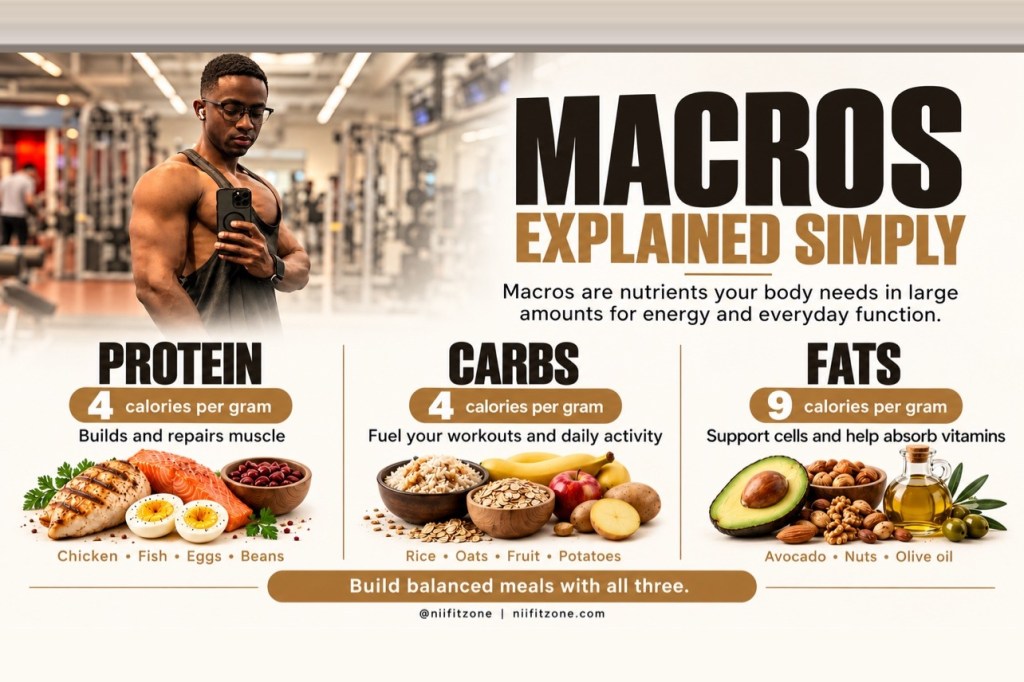
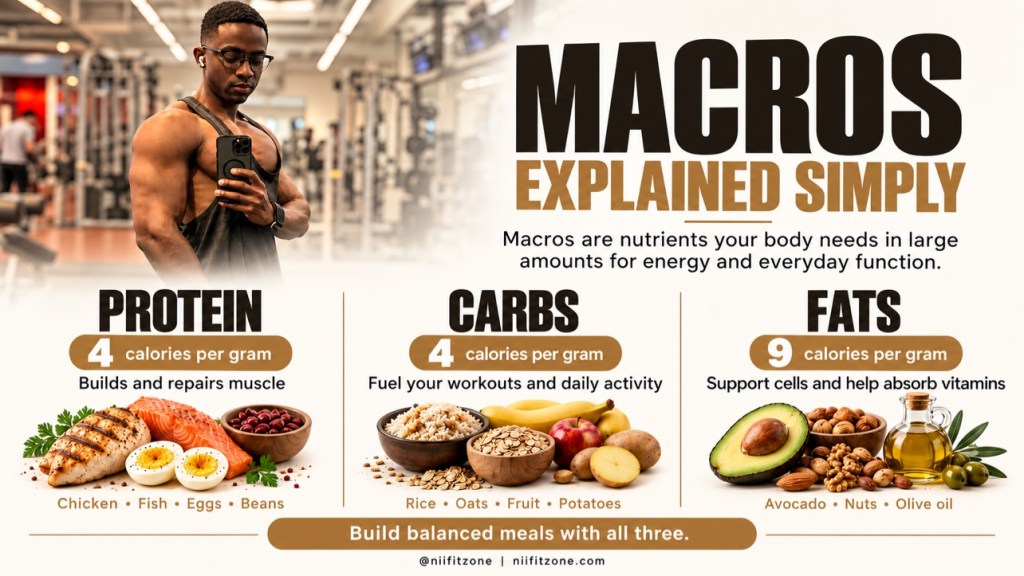
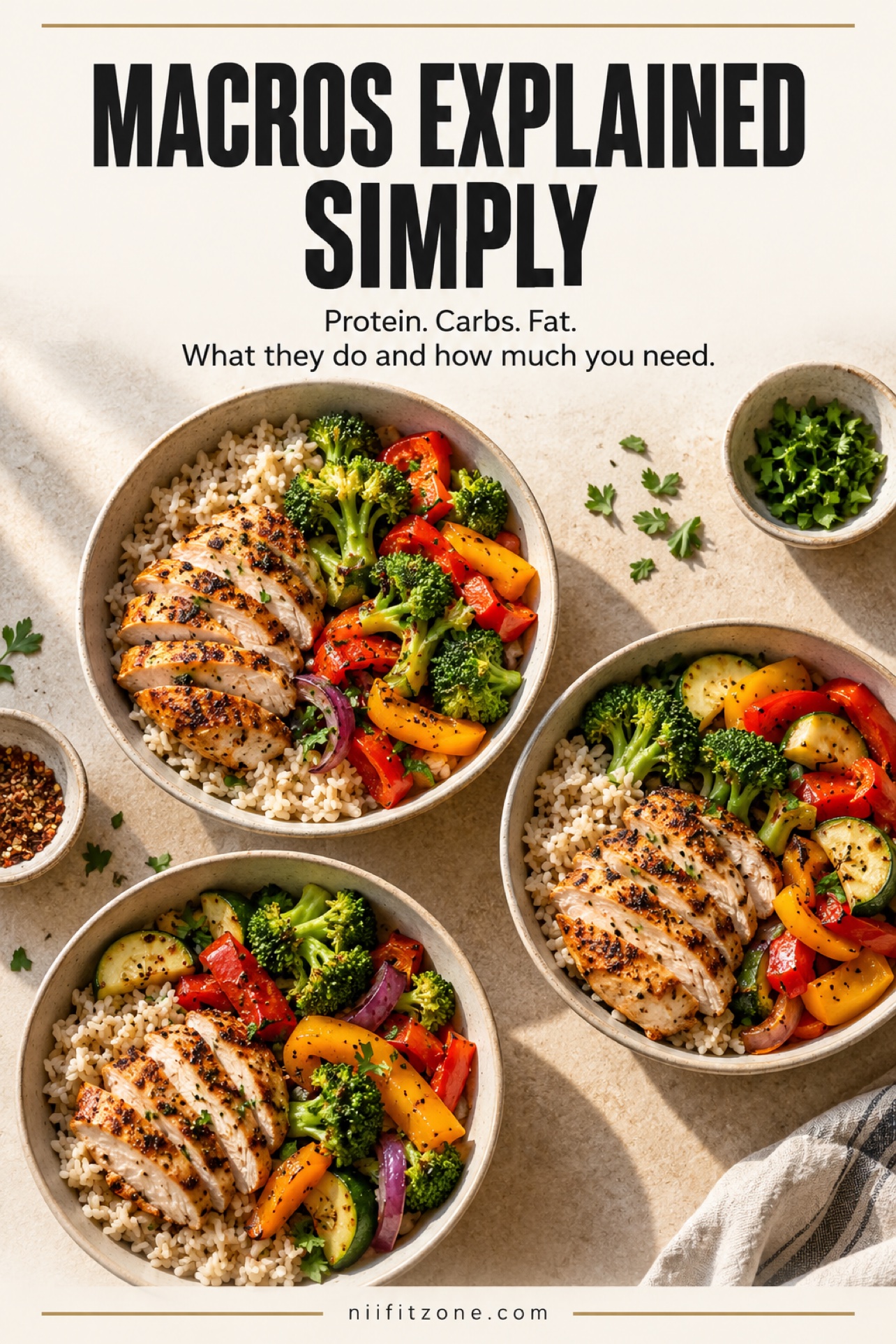
Macronutrients, or macros, are the three nutrients your body needs in large amounts: protein, carbohydrates, and fat. Every calorie you eat comes from one of these three. Alcohol has calories too, but it is not a nutrient your body needs, so we leave it out.
Protein: the builder
Protein builds and repairs muscle, keeps you full, and supports recovery after training. It has 4 calories per gram. Good sources include chicken breast, eggs, Greek yogurt, fish, lean beef, and whey protein. If your goal is to build muscle or keep muscle while losing fat, protein is the macro you want to hit first. A common target is around 0.7 to 1 gram per pound of bodyweight per day.
Carbohydrates: the fuel
Carbs are your body's preferred energy source, especially for training. They also have 4 calories per gram. Good sources include rice, oats, potatoes, fruit, and whole grains. Carbs are not the enemy. Low energy in the gym and flat workouts are usually a sign you need more of them, not fewer.
Fat: the regulator
Fat supports hormones, vitamin absorption, and keeps meals satisfying. It is the most calorie dense macro at 9 calories per gram, which is why small amounts add up quickly. Good sources include olive oil, nuts, avocado, and fatty fish. You need fat every day. You just need less of it by weight than the other two.
A simple example day
Say your targets are 200 grams of protein, 250 grams of carbs, and 65 grams of fat. That works out to 800 plus 1000 plus 585, or about 2,385 calories. Knowing those three numbers is the whole game. Hitting them consistently is what changes your body.
Why a Food Scale Beats Measuring Cups
Here is the uncomfortable truth. A tablespoon of peanut butter can weigh anywhere from 16 to 32 grams depending on how generous you are. That is a swing of about 100 to 150 calories on one spoon. Multiply that across three meals and a snack, and your 'tracked' 2,400 calorie day might really be 2,900. No wonder the scale is not moving.
- A scale measures grams. Grams do not lie, and they do not change with how you scoop.
- The tare function zeroes out your bowl or plate, so you weigh only the food.
- Weighing takes seconds. Put the plate on, hit tare, add food, read the number.
- After two to three weeks of weighing, your eyeballing gets dramatically better too.
You do not need to weigh food forever. Most people weigh for a month, learn what real portions look like, and then only weigh the calorie dense stuff like oils, nut butters, and cheese. But you have to start with the scale to calibrate your eye.
The 4 Best Food Scales for Tracking Macros (2026)
I researched the best selling food scales on Amazon and picked four that cover every budget and use case. Prices change often, so hit the button under each pick to check the current price on the live listing. Every link below is an Amazon affiliate link that supports NiiFitZone.
1. Etekcity EK6015: Best Overall
This is the best selling digital kitchen scale on Amazon, and it is the one most people should buy. It handles up to 11 pounds (5 kg), measures in 1 gram increments, and has a tare function, a backlit display, and multiple units (grams, ounces, pounds and ounces, milliliters, fluid ounces). It runs on two AAA batteries and the stainless steel surface wipes clean. It is usually the cheapest of the four, which is almost suspicious given how well it works.
Honest tradeoff: 1 gram increments are fine for food, but not for coffee or supplements where you want tenth of a gram precision. If you only need it for meals, that will never matter.
2. Etekcity EK5250: Best With a Bowl
Same trusted brand, but this one comes with a removable bowl and finer 0.1 gram precision for anything under 1,000 grams. The bowl doubles as a cover for storage, which is a nice touch if your kitchen drawers are already crowded. Capacity is the same 11 pounds (5 kg), and it has the same tare function and backlit display. It usually costs a few dollars more than the EK6015.
Honest tradeoff: the 0.1 gram precision only applies under 1,000 grams, then it switches to 1 gram. That is a non issue for food, but worth knowing. The bowl also adds bulk if you want the slimmest scale possible.
3. Renpho Digital Food Scale: Best Smart Scale for Macro Tracking
If you want the scale to do the math for you, this is the pick. It connects to the Renpho Health app over Bluetooth, and the app has a large food database with a barcode scanner. Weigh your chicken, tap the food in the app, and it logs the calories and macros for you. It measures from 3 grams up to 5 kg in 1 gram increments, has a tare function, five switchable units, and syncs with Apple Health. It is usually the most affordable way to get app based macro logging.
Honest tradeoff: you have to keep your phone nearby and use the app to get the smart features. If you would rather just read a number and log it in MyFitnessPal yourself, save the money and get the Etekcity. Also, the barcode scanner only works in the US.
4. OXO Good Grips 5-lb Food Scale: Best Premium Pick
OXO is the buy it for life brand of kitchen tools, and this scale shows why. The standout feature is the pull out display, so a big bowl or plate never blocks your view of the numbers. It measures in 1 gram and 1/8 ounce increments up to 5 pounds, has a zero/tare button, a capacity meter that shows how much range is left, and the platform removes for washing. It holds a 4.6 star rating from thousands of reviews. It is the priciest of the four, roughly triple the Etekcity.
Honest tradeoff: the 5 pound capacity is half of the Etekcity models, so it is not the pick for weighing a full meal prep tray. And you are paying roughly triple the Etekcity for build quality and design, not better accuracy.
Quick Comparison
| Scale | Capacity | Precision | Standout feature | Price tier |
|---|---|---|---|---|
| Etekcity EK6015 | 11 lb / 5 kg | 1 g | Best seller, dead simple | Budget |
| Etekcity EK5250 | 11 lb / 5 kg | 0.1 g under 1 kg | Removable bowl doubles as cover | Budget |
| Renpho smart scale | 11 lb / 5 kg | 1 g | App logs macros automatically | Mid-range |
| OXO Good Grips 5-lb | 5 lb | 1 g / 1/8 oz | Pull out display | Premium |
How to Use Your Scale for Macros: The 60 Second Method
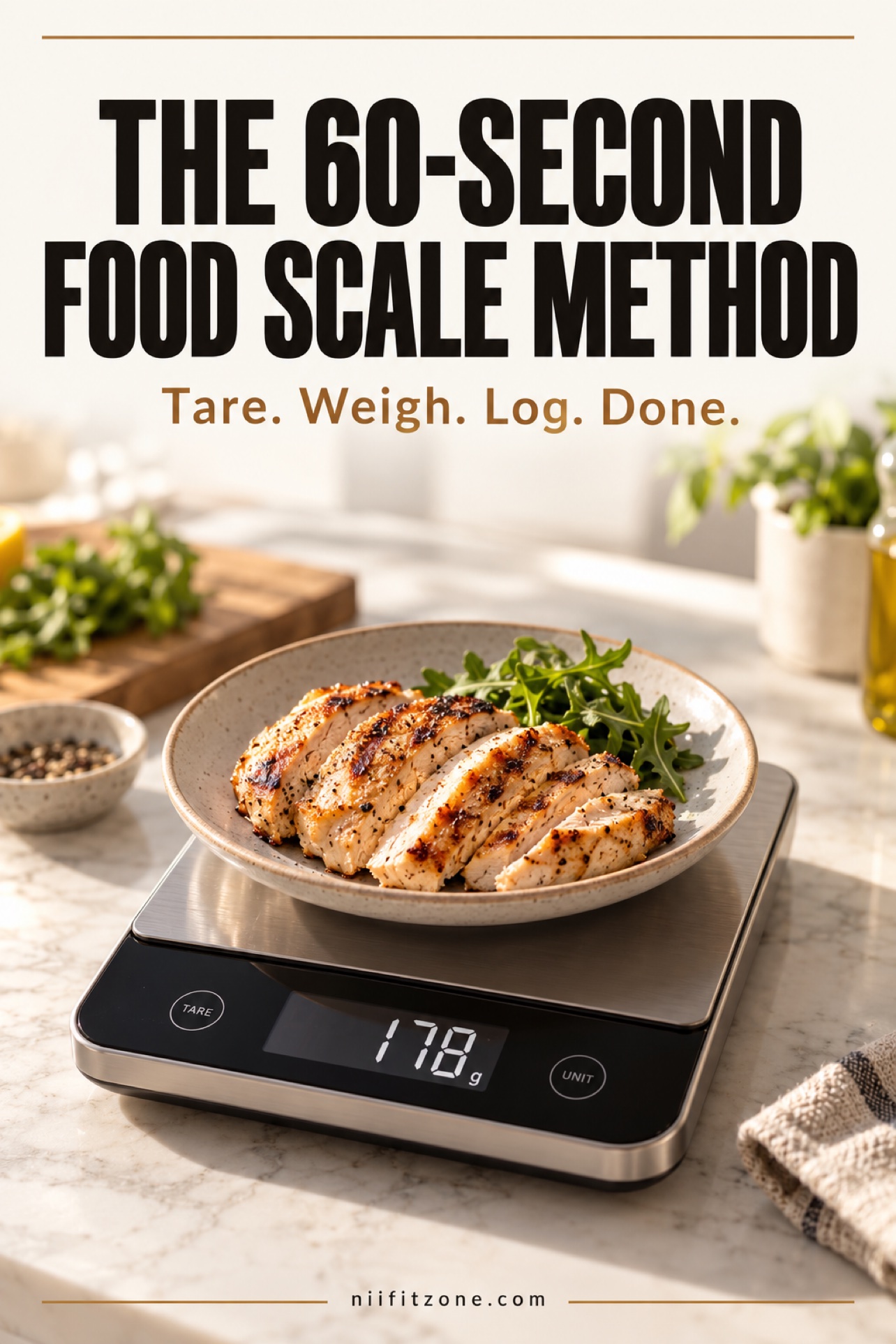
You do not need a complicated system. Here is the whole routine:
- Put your empty plate or bowl on the scale and press tare (or zero). The display reads 0.
- Add your protein. Say the scale reads 150 grams of cooked chicken breast. That is roughly 46 grams of protein.
- Press tare again, add your rice, read the number, log it. Repeat for each item.
- For calorie dense foods like oil, put the bottle on the scale, tare it, pour, and read the negative number. That is exactly how much you used.
Log the numbers in any free tracker like MyFitnessPal. After a few weeks, compare your averages to your targets and adjust portions up or down. That feedback loop is the entire secret of people who actually hit their macros.
The Bottom Line
If you just want the tool that works, get the Etekcity EK6015. It is the budget pick, it is the best seller for a reason, and it will do everything a macro tracker needs. If you want the app to log macros for you, step up to the Renpho smart scale. If you cook a lot and hate squinting past a big bowl, the OXO is worth the premium.
Whichever you pick, the scale only works if you use it. Weigh your food for the next 30 days and watch what happens to your consistency. Your workouts built the engine. Your macros are the fuel. Measure the fuel.



Leave a comment